
Harley-Davidson Flathead | Oil, Specs, Models & History
The Harley-Davidson Flathead powered civilian motorcycles, race bikes, military WLAs and the long-running Servi-Car. This guide covers Flathead engine history, original WLA lubrication specifications and modern oil choices for these classic side-valve V-twins.
What Oil Should You Use in a Harley-Davidson Flathead?
There are two useful answers: the original period specification and the modern lubricant recommendation. They come from different eras and should not be treated as the same thing.
Original 1943 WLA specification: SAE 50 engine oil above 32°F (0°C), SAE 30 between 10°F and 32°F (-12°C to 0°C), and SAE 10 below 10°F (-12°C).
Current AMSOIL Flathead recommendation: SAE 60 Synthetic V-Twin Motorcycle Oil is listed as the primary Flathead recommendation, with 20W-50 Synthetic V-Twin Motorcycle Oil as the secondary option.
That does not mean every rebuilt, restored or unrestored Flathead should automatically use SAE 60. Bearing clearances, oil-pump condition, engine wear, ambient temperature and modifications all matter. If the engine builder specified a particular viscosity, follow that recommendation.
What Is a Harley-Davidson Flathead Engine?
A Harley-Davidson Flathead is a side-valve engine. Instead of placing the intake and exhaust valves in the cylinder head like an overhead-valve engine, the valves are positioned beside the cylinder in the engine block.
This allows the cylinder head itself to remain relatively simple and flat. That distinctive head design is where the Flathead nickname comes from.
Harley-Davidson introduced its 45-cubic-inch Flathead V-twin in the Model D in 1929. Larger 74-cubic-inch and 80-cubic-inch Flathead engines later powered Harley-Davidson Big Twins.
Flathead describes the engine design — not one single engine.
Different Harley-Davidson Flathead families used different engine sizes, applications and lubrication arrangements. Always identify the specific model before choosing oil or service specifications.
Harley-Davidson Flathead Models
| Family | Displacement | Era / Application | Why It Matters |
|---|---|---|---|
| D Series | 45 cu. in. | Introduced 1929 | Beginning of Harley-Davidson's 45-inch Flathead V-twin era. |
| R Series | 45 cu. in. | Early 1930s | Predecessor to the later W-series 45. |
| W / WL | 45.12 cu. in. / 739 cc | From 1937 | Civilian platform that formed the basis of the military WLA. |
| WLA / WLC | 45.12 cu. in. / 739 cc | Military | U.S. and Canadian military versions of the 45-inch platform. |
| WR | 45 cu. in. | Competition | Performance development of Harley-Davidson's side-valve 45. |
| U / UL | 74 cu. in. / 1,207 cc | From 1937 | Large-displacement Big Twin Flathead. |
| UH / ULH | 80 cu. in. / 1,310 cc | From 1937 | Largest production Flathead Big Twin family. |
| G Servi-Car | 45 cu. in. | Utility trike | Kept the Flathead engine in Harley-Davidson production through 1973. |
The WLA Used a Dry-Sump Recirculating Oil System
The military WLA should not be described as a simple total-loss engine lubrication system. Its technical manual describes a dry-sump system with separate feed and return functions.
Oil is stored in an external tank. A feed pump supplies oil to the engine, while a scavenger or return pump moves oil from the crankcase back to the tank.
The circulating lubricant performs both lubrication and cooling duties, which is particularly important in an air-cooled side-valve engine.
WLA Oil Tank Capacity
The period lubrication guide lists the external oil tank capacity as 1 U.S. gallon.
WLA Transmission Capacity
The same guide lists transmission capacity as 3/4 pint.
Original Harley-Davidson WLA Oil Viscosity
The period WLA technical manual specifies crankcase-grade engine oil according to ambient temperature.
| Ambient Temperature | Original Oil Grade | Oil Tank | Transmission |
|---|---|---|---|
| Above 32°F / 0°C | SAE 50 | 1 U.S. gallon | 3/4 pint |
| 10°F to 32°F / -12°C to 0°C | SAE 30 | Same system capacity | Same system capacity |
| Below 10°F / -12°C | SAE 10 | Same system capacity | Same system capacity |
These are historical specifications for the military WLA. Restored, rebuilt and modified Flatheads may require different lubricant choices based on their current mechanical condition.
Modern Oil Options for a Harley-Davidson Flathead
A modern lubricant does not have to duplicate the chemistry of a 1940s oil. The goal is to provide appropriate viscosity, film strength, thermal stability and wear protection for the engine as it exists today.
AMSOIL SAE 60 Synthetic V-Twin Motorcycle Oil
AMSOIL currently lists SAE 60 as its primary Harley-Davidson Flathead recommendation.
It is designed for high-temperature V-twin service and provides strong viscosity retention and wear protection.
View V-Twin oil informationAMSOIL 20W-50 Synthetic V-Twin Motorcycle Oil
AMSOIL lists 20W-50 as the secondary Flathead recommendation.
Its multigrade viscosity provides improved cold-flow characteristics compared with a straight-grade oil while maintaining SAE 50 high-temperature viscosity performance.
View 20W-50 V-Twin oil informationSAE 50, SAE 60 and 20W-50 are not the same viscosity grade.
The original WLA manual specifies SAE 50 for warm-weather operation. AMSOIL's current application guidance lists SAE 60 first and 20W-50 second for Flathead engines. The recommendations come from different eras and should be understood in that context.
Do Not Treat Every Flathead Like a Modern Harley-Davidson
Modern Harley-Davidson motorcycles are commonly discussed in terms of separate engine, transmission and primary lubrication compartments. Applying that assumption directly to a vintage Flathead can lead to bad service advice.
The military WLA technical manual specifies crankcase-grade engine oil for the transmission and describes engine-driven chain oiling systems. The lubrication arrangement therefore differs substantially from many modern Harley-Davidson motorcycles.
Nearly a century of restorations and modifications complicates things further. A surviving Flathead may have modified oil pumps, altered chain oiling, different seals, updated transmission parts or a rebuilt engine with different bearing clearances.
Mechanic's rule: identify the exact year, model and current mechanical configuration before selecting lubricants. Do not choose an oil simply because another Harley owner uses it.
Simple Architecture That Earned a Serious Reputation
Harley-Davidson Flatheads were not the company's most powerful engines, but their relatively simple side-valve architecture, low-speed torque and serviceability helped keep them working in civilian, commercial and military applications for decades.
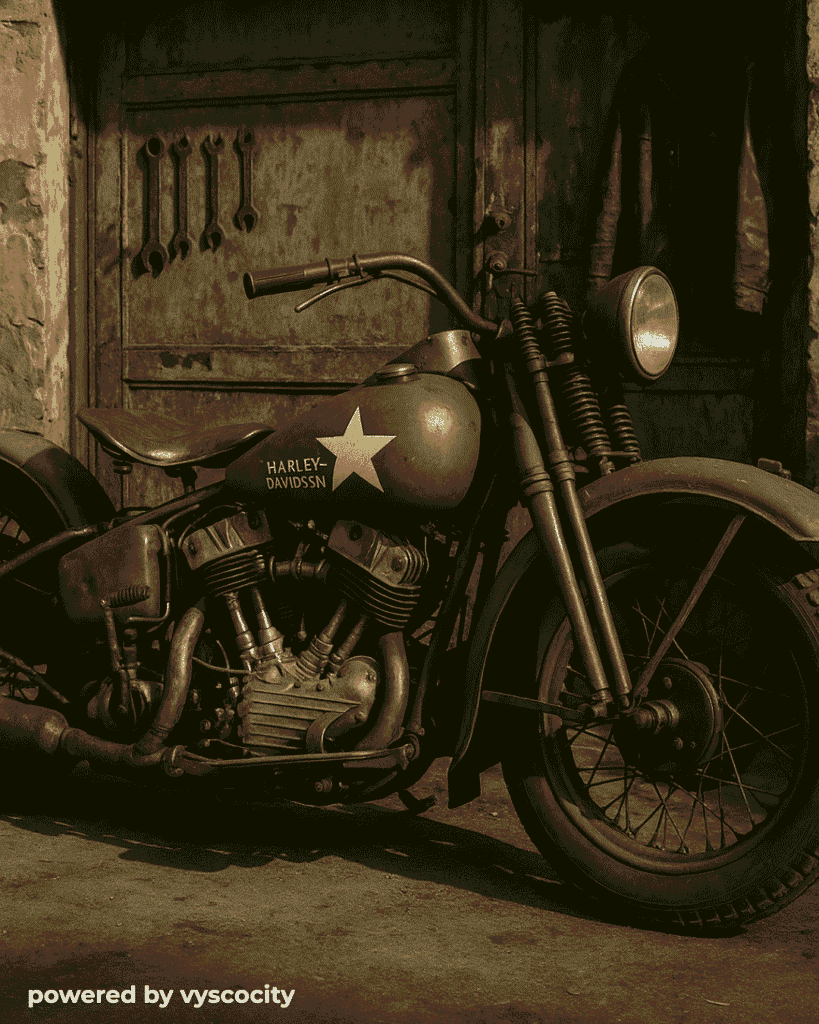
The Harley-Davidson WLA Flathead in World War II
Harley-Davidson's civilian WL was already established before the United States entered World War II. The military WLA adapted that 45-cubic-inch Flathead platform for Army service.
Military equipment included blackout lighting, an oil-bath air cleaner and mounting provisions for military equipment. The basic Flathead powertrain was well suited to dispatch and transport work because it was durable and relatively straightforward to service.
The WLA became one of the best-known military motorcycles of the era. Canadian military WLC models used the same basic 45-cubic-inch Flathead architecture.
Flathead Oil-System Checks That Still Matter
Check Oil Level Frequently
Period WLA service guidance calls for frequent oil-level checks. Vintage engines generally deserve more attention than a modern sealed powertrain.
Service More Often Under Severe Conditions
Heat, dust, mud, high-speed operation and heavy loads increase stress on the lubricant and engine.
Know What Has Been Modified
Restorations can alter oil pumps, chain oilers, primary systems, seals, bearings and engine clearances.
Choose Oil by Application
A premium lubricant cannot compensate for the wrong viscosity, a worn oil pump or excessive internal clearances.
Harley-Davidson Flathead FAQ
What oil did a Harley-Davidson WLA originally use?
The 1943 WLA technical manual specifies SAE 50 above 32°F, SAE 30 from 10°F to 32°F, and SAE 10 below 10°F.
Is a Harley-Davidson WLA a total-loss oil system?
No. The WLA engine uses a dry-sump system with a feed pump and a scavenger or return pump that circulates oil between the engine and external oil tank.
What AMSOIL is recommended for a Harley-Davidson Flathead?
AMSOIL lists SAE 60 Synthetic V-Twin Motorcycle Oil as its primary Flathead recommendation and 20W-50 Synthetic V-Twin Motorcycle Oil as the secondary recommendation.
Is SAE 60 the same as SAE 50 or 20W-50?
No. SAE 50 and SAE 60 are different high-temperature viscosity grades. A 20W-50 is a multigrade oil designed to provide different low-temperature performance while remaining within the SAE 50 high-temperature viscosity range.
Can you use synthetic oil in a Harley-Davidson Flathead?
Modern synthetic lubricants can be appropriate for Flathead engines, and AMSOIL publishes synthetic SAE 60 and 20W-50 recommendations for the application. Confirm the required viscosity on unknown, worn, rebuilt or modified engines before changing fluids.
How much oil does a Harley-Davidson WLA hold?
The period WLA lubrication guide lists the external oil tank capacity as 1 U.S. gallon and the transmission capacity as 3/4 pint.
More Harley-Davidson & Motorcycle Oil Guides
AMSOIL V-Twin Motorcycle Oil
Compare SAE 60, 20W-50 and other motorcycle lubricant options.
View the V-Twin oil guideHarley-Davidson Model Abbreviations
Decode Harley-Davidson model letters and terminology used across different generations.
View Harley-Davidson abbreviationsAMSOIL Product Lookup
Find lubricant and filter recommendations for motorcycles, vehicles and equipment.
Open the product lookup guideAMSOIL Preferred Customer
Buy AMSOIL for your own vehicles and equipment? Review the Preferred Customer program.
See Preferred Customer informationNeed Oil for Your Harley-Davidson Flathead?
Start with the actual motorcycle, not a generic Harley recommendation. Identify the model, lubrication configuration and engine condition, then choose the viscosity that fits the application.